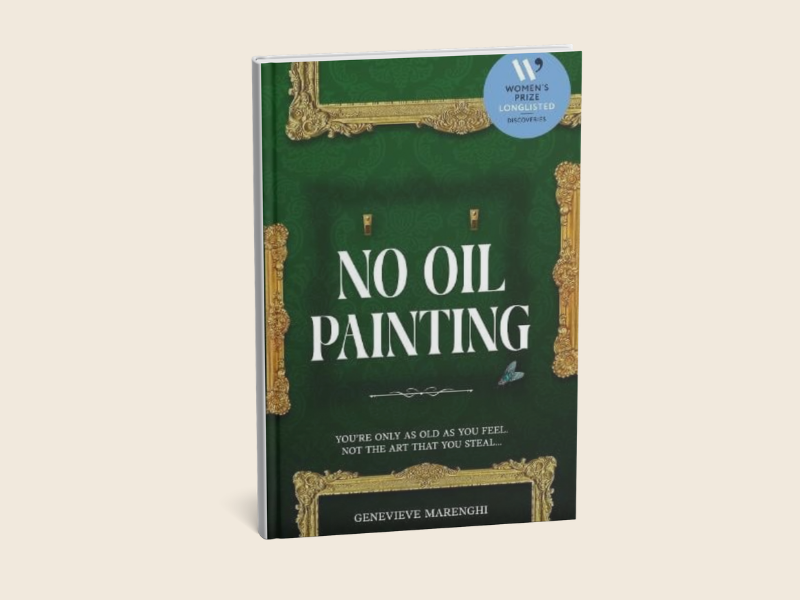
No Oil Painting
A reverse art heist at the National Trust. Bored septuagenarian Maureen steals a valuable painting from Ham House. Some fellow volunteers rumble her, but snitches get stitches, camaraderie wins out, and they decide to help. Can they return it without being caught by the cops? ‘Deliciously comic… sharply observed… sparkling debut that defies stereotypes about women ageing invisibly’ Emma van Straaten. Paperback £9.99, from Amazon, high street retailers, and indie bookshops in SW London; also ebook £4.99 from Amazon.
How I did it
There was a time in my life, after nursing my mother with terminal ovarian cancer, and my daughter who needed open-heart surgery, when I was utterly exhausted all the time. I was diagnosed with ME and the immunologist told me I needed to resign from my job.
When I began to regain some energy, I became a volunteer guide at Ham House, a National Trust property near Richmond. The other volunteers were mainly retired people, and quite a lot older than me – and honestly, they were the most interesting and erudite people I’d ever worked with.
I also signed up for a series of writing courses, including two with Curtis Brown Creative. Though I’d worked in publishing for years it wasn’t until I turned 50 that I started writing fiction. Being surrounded by history at Ham House, I originally planned to write a historical novel. Then I heard a radio report about a painting by Titian that was discovered dumped in a plastic bag at Richmond Station. And I thought that would make a brilliant scene in a cosy crime novel...
I imagined a character called Maureen, single and in her late 70s, who is a volunteer guide at a stately home, and in the midst of an ‘eve of life’ crisis after her beloved niece and grand-niece relocate to New York. When she hears that her favourite painting is to be moved to Scotland, it’s the last straw. Certain that no one will ever appreciate the painting as much as she does, she decides to steal it, while the alarms are switched off during the filming of an episode of Poirot.
I wrote a 90,000-word draft, sent a truly terrible query letter to over 30 literary agents – and heard nothing. Then I saw an advert for the Women’s Prize Discoveries Award, so I tidied up the first 10,000 words and pressed ‘send’.
The book was longlisted, which included being mentored through two major edits. I was then signed by an agent, who sent it out to 27 editors. Initially there were no takers, but at the start of 2023, an editor at Hodder & Stoughton got in touch, and suggested another round of edits. By then my father had Alzheimer’s and needed my attention – and by the time I’d reworked the book again my agent was on maternity leave, so we had to part ways.
I had pretty much given up when someone told me you could approach indie press editors without an agent, so I started querying again. Richard Mayers of Burton Mayers Books got in touch immediately. I eventually signed a contract in May 2025, and it came out in October the same year.
GENEVIEVE MARENGHI studied English and Philosophy and worked for 11 years at the Financial Times, where she helped create How To Spend It magazine. This demanding role, combined with family stresses, caused her to develop ME and leave full-time work. She has volunteered for years as a National Trust guide at Ham House in Richmond, where the novel is set.