.png)
In October 2025, more than 20 independent publishing houses came together to declare an ‘existential crisis’, calling for the trade to work together to secure the longevity of UK indies. The letter lists four key issues – inflation, sales and distribution, production issues and funding – and warns that without change there is a real possibility that many will be unable to continue operating within the next five years, indefinitely altering the breadth and diversity of the UK’s literary landscape.
The warning was not abstract: those closures are already happening. Heather McDaid and Laura Jones-Rivera, founders of Edinburgh-based 404 Ink, announced in July 2025 that the press would cease all operations this summer. ‘We felt the best service we could do, to ourselves, our authors, and the legacy of 404 Ink, is to go out while on top, following our biggest year ever, and on our own terms,’ they wrote. Jones-Rivera was plainer still about what the system demands of the people running it. ‘We realised that we couldn’t keep running this company if we both had children. Which is quite an indictment of the system as it is, and how impossible it is to make a small company work with two women.’ Makina Books is on indefinite hiatus; Lolli Editions has also paused; and Influx Press was acquired by US-based Diversion Publishing Corp. in March.
These presses are not failures. They did significant work, nurtured authors, won prizes, and have nonetheless found themselves unable to sustain operations in conditions that have become structurally impossible.
The scale of attrition is visible from the inside. As the project manager of Mslexia’s Indie Press Guide, which has tracked the sector across five editions and a decade, the first task of each new edition is methodical: work through the previous edition’s database, marking in amber those presses showing no sign of life, and marking in red those that have formally announced closure. In the most recent edition, 237 presses were removed – around 30 per cent of those listed in the previous edition. And yet the fifth edition was our biggest yet, containing 751 presses in total. The sector is continuously expanding and contracting. The independent publishing sector is constantly fluctuating, an ecosystem that is simultaneously generative and structurally precarious.
ECONOMIC REALITY
To understand why small presses are under such pressure, it helps to understand the economic reality that most readers never see. The margins have become, in many cases, negative. Sam Jordison of Galley Beggar Press, publisher of Eimear McBride and Lucy Ellman, published a blog breaking down the costs of a ‘typical’ book. In 2015, a typical paperback generated a working profit margin of between 43 pence and 93 pence; by 2023, that figure had fallen to between minus 46 pence and 21 pence per copy. ‘These books matter and we owe it to the world to continue to bring them out,’ says Jordison. ‘Even if we sometimes worry about the payback (and even, sometimes, survival).’
Nigeria-founded Cassava Republic published a similar breakdown: after bookseller discount and distribution costs, the publisher receives £4.12 from a £10.99 paperback. Once royalties, print and paper, editorial and design, marketing and publicity, and overheads are met, the margin per copy is approximately 37 pence, or 9 per cent of the net cover price. On a returned copy, this becomes a net loss. Returns compound the problem: publishing remains the only consumer industry still operating sale or return – a hangover from wartime paper shortages. A small press shipping five hundred copies to retailers may receive a hundred back unsold, printed, shipped and stored at their expense, generating no income.
As Stefan Tobler of And Other Stories puts it: ‘We are not tied to some person that has the chequebook. We are the chequebook.’ It’s a statement of both pride and precarity.
The UK publishing industry is, by any measure, a global success story. Long hailed as a powerhouse in the world of publishing, with a rich heritage, the UK has produced some of the most influential and successful authors in history. According tothe Publishers Association’s most recent economic research from 2024, the UK publishing sector contributes £11 billion to the economy, supports 84,000 jobs, and generates £6.5 billion in export value, making it a world leader in book exports. The research, conducted by public policy consultancy Public First, also revealed that publishing has the potential to contribute a further £5.6 billion to the economy by 2033, in addition to supporting a further 43,000 jobs.
And yet the part of the ecosystem generating the cultural distinctiveness that underpins this is in crisis.
The cultural case for independent publishing is hard to contest. It is demonstrated, repeatedly, by prize culture. In 2022, all the major prizes went to books published by independents: the Booker, the International Booker, the Nobel, the Goldsmiths and the Pulitzer. In 2025, the International Booker shortlist was a clean sweep for indie presses. The commercial mainstream increasingly follows where the independents lead. That the sector which generates this literary distinctiveness is simultaneously operating on negative margins is a systemic failure.
Fiammetta Rocco, Emeritus Director of the International Booker, recently noted that ‘it is independent presses who are driving the translated fiction market.’ But the prizes that reward this work also come at a cost. Sam McDowell, co-founder of Charco Press, explains how a longlisting ‘immediately introduces unplanned cashflow challenges. An extra print run of 3,500 copies may cost a publisher £6,000. Then, if the book gets onto the shortlist, there is the cost of bringing author and translator to the ceremony.’
SUCCESS STORIES
‘The UK is home to a rich landscape of independent publishers who take risks on books that have been ignored by the wider industry, launch careers, and spark stylistic innovation,’ reads the open letter. Because while times are undoubtedly hard, indie presses are also pioneering in terms of dexterity and initiative.
Manya Wilkinson spent many years trying to get published before Lublin found its home at And Other Stories. The novel – a fable-like picaresque set among Jewish boys in early 20th Century Poland – arrived at its publisher by a stroke of luck: one of the novel’s early readers, a colleague at Newcastle University, turned out to be one of the press’s readers, passed the manuscript along, and it was accepted. ‘This is after years of trying to get published and having real difficulties,’ says Wilkinson. ‘So finally, I gave it to some friends to read, who were either writers or academics, hoping for some feedback that was useful.’
Lublin went on to win the Hawthornden Prize for Literature, the Wingate Literary Prize and the RSL Encore Award for best second novel – all in 2025. Does she think that her work could have found a home at a commercial publisher? Wilkinson sits with the question. ‘I always think of my writing as a little bit niche,’ she says. ‘Those awards have sort of made me rethink that a little bit.’ She hopes that some mainstream publishers are moving in a more literary direction. ‘But I’m not sure. I do wonder whether my work is just that bit too unique, too individual, too literary.’
Wilkinson also observes something structural: because And Other Stories publishes far fewer titles than a mainstream publishing house, each title competes with fewer others internally when it comes to prize submissions. The press was able to commit to putting Lublin forward widely and consistently. Three prizes in one year was partially possible due to the concentration of attention that a press managing hundreds of titles simply could not replicate.
When Carys Shannon began submitting her debut novel, Truth Like Water, to literary agents, the responses were initially encouraging. She sent query letters to 18 agents and received six full manuscript requests – an unusually high rate of return. The feedback was warm. And yet, one by one, those doors closed.
‘A lot of them felt that it wasn’t commercial enough,’ says Shannon. One suggested she turn it into a cold case crime novel. Another said she needed to raise the stakes – kill more people, add more twists. ‘The message that I was getting from agents was that in order to sell it to any of the bigger publishers, I would have had to have changed what the book was and what I was trying to do with it,’ she says.
What the agents couldn’t place – the specificity of the Welsh estuary landscape, the lyricism, the regional voice – was exactly what Parthian Books recognised. The independent Welsh press didn’t want to change the book. ‘What they wanted to do was to help me turn up the volume on the things that were working,’ says Shannon.
Truth Like Water went on to become a Books Council of Wales Book of the Month and reached the top ten bestselling adult titles in Wales in November, competing with, as Shannon notes with delight, Teach Your Cat Welsh and Teach Your Dog Welsh: ‘Nothing gets past those books on the bestseller list.’
THE EDITORIAL RELATIONSHIP
What both Wilkinson and Shannon describe, when asked about working with independent publishers, is a quality of attention that resists easy quantification. These editors were not only good, they were present in a way that’s built into the model of how small presses operate.
Shannon worked with Parthian editor Carly Holmes through an editorial letter and several rounds of conversation. ‘She was just so perceptive about what the book was and what my writing was,’ says Shannon. ‘Because of the feedback I’d been getting, I hadn’t really valued some things in my writing – the lyricism of it, or the sense of place that I’d built as a character.’ Holmes was able to home in on these qualities to really make the book shine.
Wilkinson describes a similar experience with And Other Stories editor Tara Tobler. ‘She really understood where I was, what I was doing. She really got me, as well as being a scrupulous, wonderful editor.’ Everything from the cover to the book’s production was handled with care. ‘There was such a sense of taking pride in something really wonderful that they were producing.’ Wilkinson was consulted about the cover and various aspects of production – collaboration that Shannon notes is not standard practice at larger publishers, where design is typically a marketing department decision.
Both writers describe relationships that continued well beyond publication itself. Wilkinson was accompanied to prize givings and readings; Shannon is in ongoing conversation with Parthian about a potential Spanish translation. ‘They’re just lovely people,’ she says. ‘They really believe in what they do.’
The closeness of the relationship between a small press and its authors – the editorial attention, the post-publication accompaniment, the genuine investment in what the work is and who wrote it – is what a small press can offer.
A BOOKSELLER’S PERSPECTIVE
James Routledge, founder of Opt Indie Books – a pop-up bookshop and online platform dedicated to championing the creativity, diversity, and bold storytelling of the UK and Ireland’s independent publishing and bookselling world – has spent 13 years watching the ecosystem: first as a bookseller at Forum Books in Corbridge, then managing The Bound in Whitley Bay, and now running Opt Indie alongside working as the Key Accounts and Sales Manager at Inpress Books, the UK’s leading sales and marketing agency for independent publishers. He set up Opt Indie in 2023 because he felt that the most interesting work wasn’t receiving the attention it deserved.
‘The most interesting titles are coming from small presses right now,’ he says. ‘They’re less focused on quantity of sales, and more focused on the quality of the material. It’s okay if a book doesn’t sell 20,000 copies in the first week. In fact, most of the presses that I work with would be delighted if they sold that in the book’s entire lifespan.’
For Routledge, one of the benefits of indie presses is that they genuinely serve communities by being rooted in them – And Other Stories in Sheffield, Fly on the Wall in Manchester, Bluemoose Books in Hebden Bridge, for example. He is sceptical of the gestures that the London-centric major publishers have made towards regionalism. ‘Having a hot desk office for five to eight people, but then not necessarily representing local writers on their front list… I don’t think it combats the south– north divide in the way that they think it does.’ And there’s a concrete organisational form for exactly the kind of regionalism Routledge is describing – The Northern Fiction Alliance, set up in 2016 by Comma Press, Peepal Tree Press, Dead Ink Books and And Other Stories, has more than doubled its membership since its formation.
His prescription for booksellers is practical and immediate. ‘Choosing fewer but pushing harder is probably the way forward,’ he says. If a shop carries between 4,000 and 8,000 titles, every inch of shelf is an editorial decision. And allocating 40 to 50 per cent of that space to independent publishers – really committing, hand-selling, putting titles in windows – makes a measurable difference. ‘If your shop can stock every Silver Press title, for example, that’s a fraction of the quantity – but it makes a huge difference to that press.’ He points to the Booksellers Association’s Books Are My Bag scheme as an example: when enough independent bookshops get behind a single title, that title appears in the Bookseller charts the following week. Deliberately applied collective attention can be a form of infrastructure.
THE FUNDING ISSUE
From a total of 973 National Portfolio Organisations (NPOs) – those recognised as leaders in the arts and culture sector and thereby supported with regular funding by Arts Council England (ACE) and the only grant programme to offer multi-year core funding – there are just 51 whose main discipline is classed as ‘Literature’, a little over 5 per cent, and they receive just 3.5 per cent of ACE’s total £441 million budget. Of these, just ten are publishing companies, receiving an average annual funding total of £1,073,578: 0.2 per cent of the annual budget. (By way of comparison, theatre companies receive 25 per cent of the total; visual arts companies and dance companies each receive 10 per cent.)
The problem is partially structural. ACE’s project-based criteria weight participation over audience – a framework designed for community arts programmes that doesn’t map well onto the work of publishing books and building readerships. To qualify for funding, publishers often have to develop and manage ambitious community projects on top of actually making books. The administrative burden this places on independent presses, which are often run by one or two people, is unsustainable. Wales offers a partial model: the Books Council of Wales provides structural ongoing support for publishers to commission authors and employ creative editors, as well as funding for some marketing initiatives.
Of the four issues identified in the open letter, not all are equally within the gift of government or industry to resolve. The inflationary spike that doubled small press production costs was driven by the war in Ukraine collapsing European paper supply chains, global shipping disruption in the wake of Covid, and energy price rises cascading through printing costs; domestic policy can do little to ease these pressures. However, Brexit has compounded this by effectively ending the EU distribution route that many small presses relied on for European sales, a result of complicated and uncertain tax arrangements where government intervention on trade relationships could help to ease pressure. Amazon’s pricing dominance could be addressed through legislation.
And funding is entirely a matter of political choice. A dedicated, ringfenced fund for independent publishers would recognise the profound cultural impact that the sector has. As it stands, the market is not necessarily rewarding quality: it’s rewarding scale. And arguably, commercial publishing’s most valuable properties – its prize-winning authors, its genre-defining movements, its export catalogue – are disproportionately developed by small presses first. Ringfenced investment would be a correction of a market failure that, if left unaddressed, could lead to further closures and a more limited range of books on the shelves.
IMPACT
At the Bookseller’s FutureBook conference in December, small presses called for funding for a cultural impact study to demonstrate their influence, inspired by the Booksellers Association’s report on the crucial role of indie bookshops in the UK’s cultural landscape.
Routledge recalls a question from an audience member at Max Porter’s recent PEN Lecture. ‘The question was along the lines of how we can justify the price of books going up when we’re thinking about areas of the population that are maybe working class, perhaps less affluent areas of the UK.’ What Porter countered was that books are perhaps one of the most affordable forms of entertainment. ‘If I look at spending two hours in a cinema, or buying a brand-new vinyl which might be an hour’s listen but costs as much as £40… I do feel like books are still affordable in this context,’ says Routledge. ‘We need to remind people that these are lifelong objects where potentially dozens of people have had an input, and they need to be paid.’
Jordison also calls for ‘more recognition that books are beneficial to society and do more than bring in financial returns’. ‘My dream would be to see the return of something like the old Net Book Agreement, allowing publishers to set prices and have more certainty about their returns and discounts,’ writes Jordison. Alongside more direct support for book production and literary excellence from the Arts Council, he also notes that business rate and tax reliefs for bricks-and-mortar booksellers would go some way to redressing the balance. ‘More immediately, the best solution is probably the one that has ensured publishing has survived this long: lots of people buying lots of books.’
THE FUTURE
The cumulative argument of these conversations is that the independent publishing ecosystem is surviving in conditions that make failure increasingly likely, and that the losses, when they come, are invisible to everyone except the readers who never encounter the books that don’t get made.
Shannon’s experience since publication has changed how she moves through the literary world. She buys more from independent presses, talks about Parthian on every platform available to her, and has come to understand that every purchase is a small act of structural support. ‘Working with them has definitely made me appreciate why indie presses – and regional presses that support regional voices – are so important,’ she says. ‘They really safeguard diverse voices.’
Routledge frames what that ecosystem does in straightforward terms: ‘There is something exciting happening on the ground level of publishing, where the separation between author and publisher is maybe only one person. It’s literally a relationship you have face to face with your publisher – and that’s such an organic, natural, beautiful thing.’ It remains to be seen whether there is the will, the policy imagination and the funding to preserve it before more of the presses that make it possible are gone – taking with them, quietly and irrecoverably, the books that would have been.
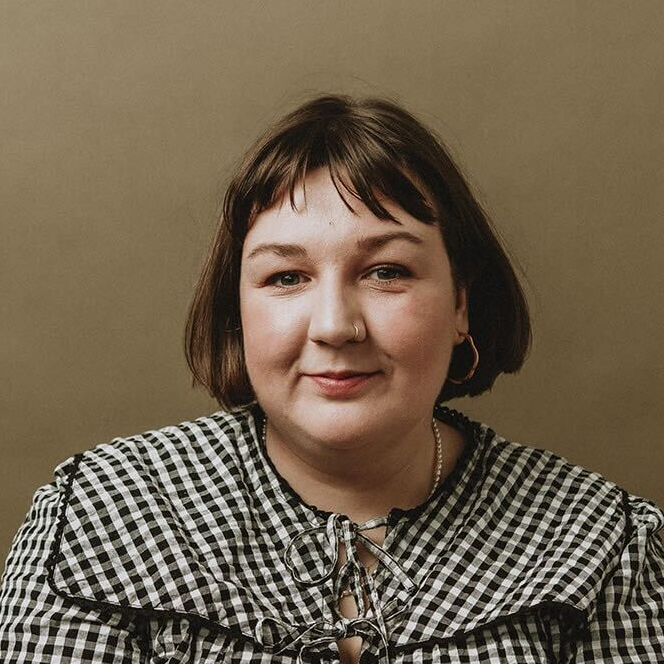
MAXINE DAVIES is Mslexia’s Production Editor. Her work has been shortlisted for the Spread the Word Life Writing Prize and the Creative Future Writing Awards, and has placed in the Reflex Flash Fiction Competition. She has been commended for the Laura Kinsella Fellowship, and was awarded DYCP funding from Arts Council England to work on her novel. She lives in Newcastle with her husband, her daughter and Dinah the cat.
If you enjoyed this article, then you'd likely love the most recent Agenda in Issue 112: Katy Massey looks at Inclusion in Practice. Subscribe today to receive a quarterly dose of writerly knowledge and inspiration direct to your door.
The Author